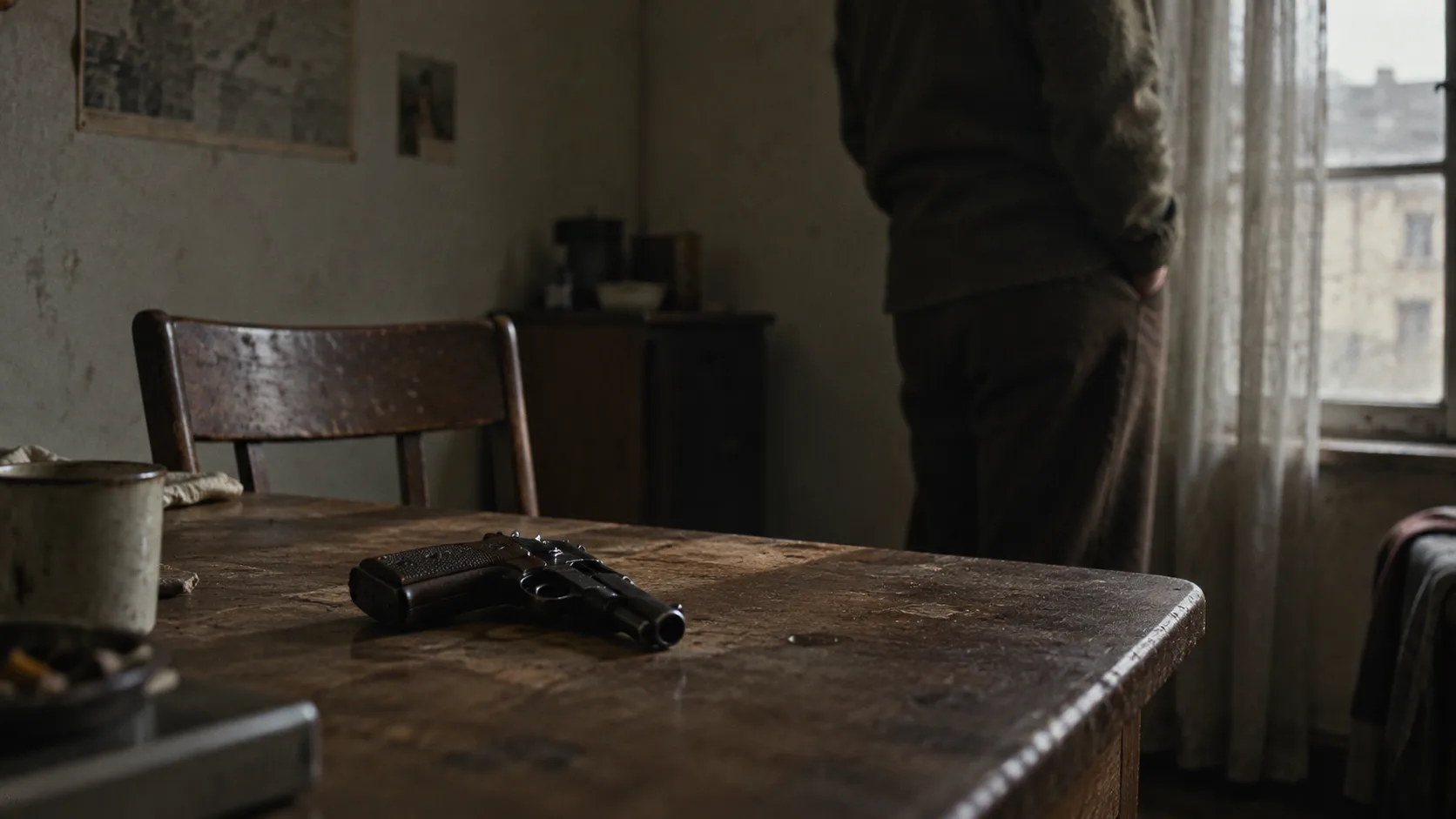
Tonight, I saw a scene from a film I'd somehow managed to miss for most of my life.
The Guns of Navarone. 1961. Gregory Peck, David Niven, Anthony Quinn.
I've spent much of my working life making films. I've watched thousands of them. And yet, here was a scene from a 65-year-old war movie that stopped me completely.
David Niven is talking. There's an argument about betrayal, responsibility and the morality of killing someone. The tension builds. And then one woman shoots another.
That's it.
No enormous spectacle. No extraordinary visual effects. No camera performing gymnastics to convince us something important is happening.
Just people in a room, words that matter, and a decision with terrible consequences.
I found it extraordinarily powerful.
And it reminded me of something fundamental about filmmaking.
We don't remember images simply because they're spectacular. We remember how they made us feel.
We're living through a remarkable moment in cinema. I've spent the last few years working with generative AI, exploring what happens when the tools of filmmaking begin to change almost beyond recognition.
Today, we can create worlds that would once have required enormous budgets. We can put cameras in places that don't exist. We can imagine almost anything and increasingly find a way to put it on screen.
I find that genuinely exciting.
But watching that scene tonight reminded me that there's an enormous difference between creating an image and creating drama.
Drama requires tension. Contradiction. Consequence. Characters who believe they're right, even when they're doing something terrible.
It requires an audience to understand what's at stake and then dread what might happen next.
You can't solve that by adding more pixels.
And I don't think this is an argument against AI filmmaking. Quite the opposite.
I believe AI will eventually help us create performances, characters and stories capable of extraordinary emotional depth. Perhaps it will open up forms of cinema we haven't even imagined.
But that's the ambition we should be pursuing.
Not simply whether we can generate a convincing explosion, a photorealistic actor or an impossible camera movement.
Can we create the silence before somebody makes a decision they can never take back?
Can we make an audience feel the weight of that decision?
Can we make somebody stumble across a scene 65 years later and stop whatever they're doing because they simply have to watch?
That's a much harder challenge.
And a much more interesting one.
I haven't even watched the whole film yet. Just that scene.
Tomorrow, I'll probably be back experimenting with some extraordinary new piece of technology. The pace of change is relentless.
But tonight, David Niven reminded me why I wanted to make films in the first place.
The future of cinema won't be defined by what we can generate. It will be defined by what we can make people feel.
I’m Colin Melville, an Executive Creative Director. These views are my own.
More from The Shift ↗