1 — When Destinations Died: Why Reality Itself Became the Interface
For more than a decade, the tech industry chased the wrong idea.
It believed the future of immersion would be a place — a destination you travelled to, a digital elsewhere where presence existed only after departure from ordinary reality.
That idea is now dead.
Not because the technology failed, but because the premise was flawed from the start.
2 — The Metaverse Didn’t Collapse — It Misread Reality
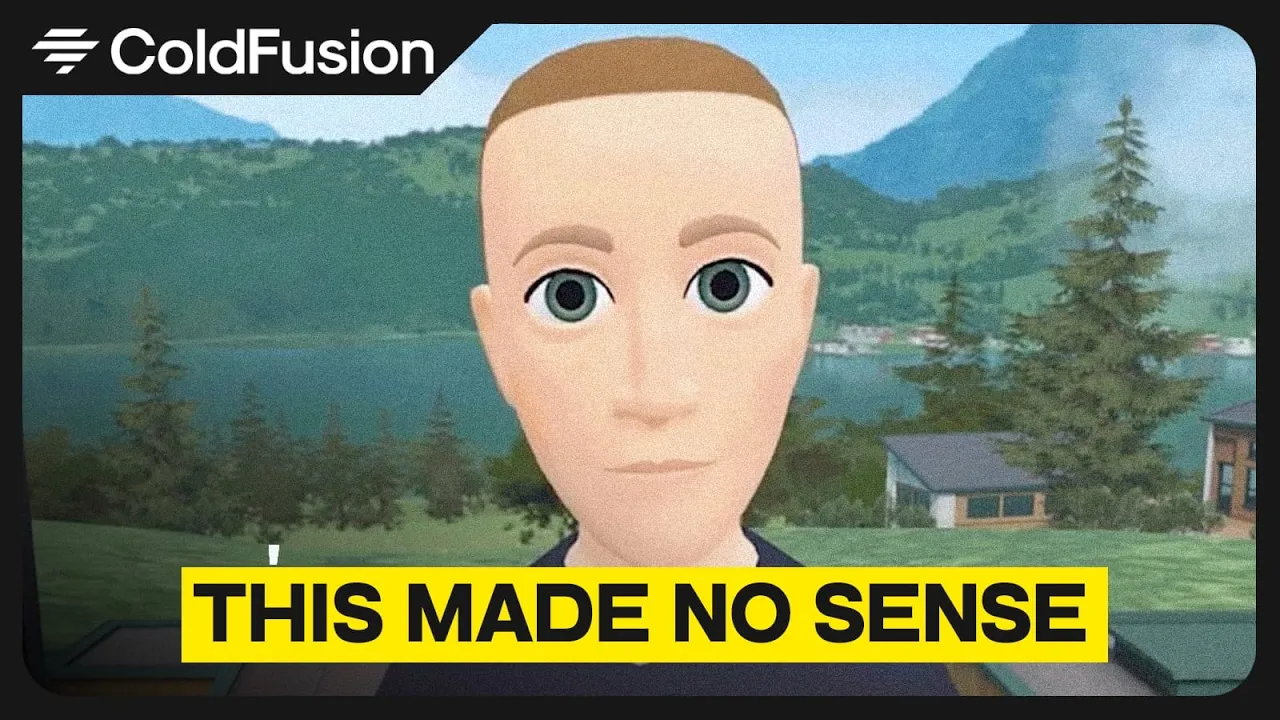
In January 2026, Meta cut roughly 10 % of its Reality Labs workforce — around 1,000–1,500 roles — and closed multiple VR studios as part of a broader strategic refocusing on artificial intelligence and wearable devices. Reality Labs, long the division driving the company’s metaverse investments, has been a persistent financial drain, with more than $70 billion in losses since 2021. Meta has shifted capital toward AI and wearable product lines instead of immersive VR worlds.
A companion report confirmed Meta is discontinuing its workplace VR app, Horizon Workrooms, and winding down sales of its Horizon managed services as part of the same pivot. This move explicitly reflects the company’s shift away from constructing virtual destinations toward practical, AI-integrated experiences.
Importantly, these adjustments are not abandonment of immersive technology. They are admissions that immersive experiences must not require exit from physical reality to matter.
You don’t succeed by asking people to leave the world — you succeed by letting the world adapt.
3 — Why Destinations Were Always the Wrong Model
The fatal flaw of the early Metaverse was its dependence on occlusion.
To enter the metaverse, users had to block out the physical world — sight, sound, social context, environment. This trade-off might be compelling for short bursts of entertainment or training, but it is untenable as an everyday medium. Humans are social and context-dependent; isolation breaks continuity.
People don’t want to abandon reality. They want technology to work inside it.
This is the shift no one acknowledged loudly enough:
Immersive experiences are not defined by isolation — they are defined by integration with lived experience.
4 — From Virtual Worlds to World-Aware Systems
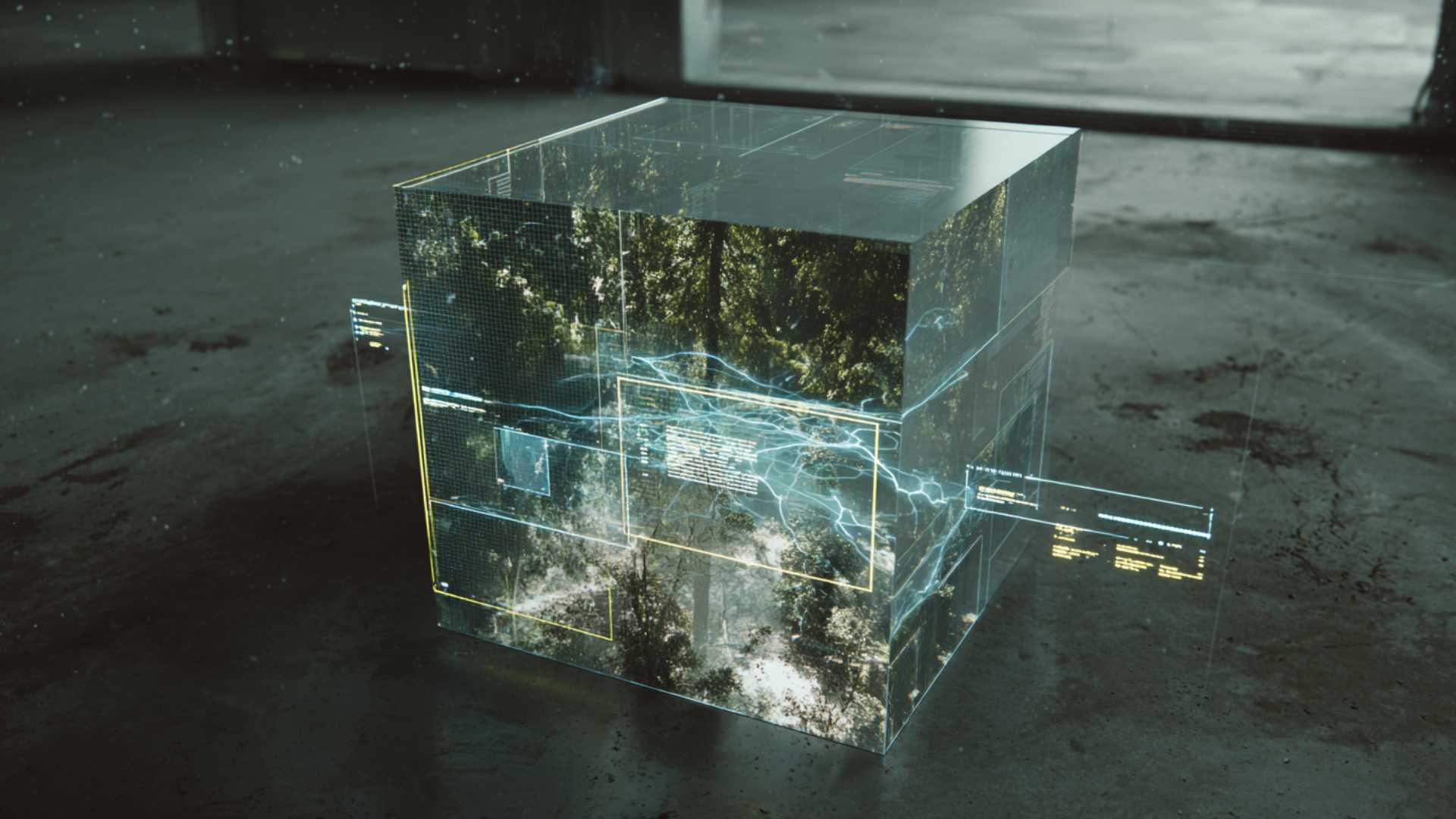
What replaces the old vision of immersive digital “worlds” is not another destination. It’s a layer that adapts to reality.
Adaptive Reality systems do not ask you to log in.
They observe, interpret, and respond.
AI is now moving beyond generating static scenes or fixed environments toward models that understand the structure of real space, behaviour, intention, and context in real time. Rather than rendering worlds that exist only in waiting, these systems generate responsive situations that evolve with the user and the environment.
Reality doesn’t disappear.
It becomes programmable.
For practical – and commercial – usage, this explains why heavyweight VR headsets failed but AI-powered wearables and AR glasses (like Ray-Ban Meta smart glasses) show a more immediate path to adoption: lower friction, co-presence with reality, and real-world utility.
This is not another “world.”
It’s an interface redesign.
5 — The End of “Content” as a Finished Object
The early Metaverse assumed that experiences would be manually authored — worlds built scene by scene, asset by asset. That approach was costly, slow, and unsustainable.
By contrast, adaptive systems derive structure from real-time models:
They understand context rather than simply display visuals.
They respond to behaviour rather than replay authored scripts.
They align with physics and space instead of faking immersive presence.
This shift breaks the core assumption of the old Metaverse: that immersion must be constructed.
Immersion is now about behavioral coherence — experiences that feel anchored to context, time, and intention.
6 — Presence Is No Longer Just Visual
One reason the Metaverse stalled was its fixation on graphics and 3D spaces.
Real presence is neurological:
it emerges when intention, action, and response form a seamless loop.
High-resolution visuals matter less when the brain perceives delay, friction, or context loss. The future isn’t defined by rendering power alone, but by synchronisation: rapid adaptation to human signals and environmental cues.
This is why the next phase of interaction emphasises:
lightweight wearables and smart glasses
low-latency cloud compute
spatial audio
gesture and subtle sensory feedback
These do not replace reality; they augment its dynamics.
7 — The Ethical Horizon: Designing for Mental Integrity
As immersive systems adapt to humans rather than require human adaptation, the ethical stakes change shape.
The debate shifts from data privacy to mental integrity.
When systems respond dynamically to context, emotion, and behaviour, the boundary between assistance and influence narrows. If every narrative experience is tailored to individual predilections, the shared cultural ground necessary for collective discourse weakens.
We risk not just Filter Bubble 2.0 —
but a personalized reality tunnel where challenge, contradiction, and shared signals are diminished.
This isn’t a halt on progress.
It’s an imperative for governance.
The real question becomes:
Who sets the rules of adaptation when reality itself is a platform?
8 — What This Means for Creators and Brands
The collapse of the early Metaverse doesn’t mean the end of immersive ambition.
It means the end of spectacle-led thinking.
If reality itself becomes the interface, then:
You are no longer designing worlds.
You are designing systems of presence.
The creative challenge shifts upstream to:
behaviour design
temporal continuity
context-aware narrative logic
adaptive emotional engagement
Immersion is not a place.
It’s a state.
And the work is not to make media —
it is to design conditions of experience.
9 — Conclusion: Atmosphere Beats Architecture
The Metaverse failed because it tried to be a place.
Adaptive Reality wins because it is the air around us.
Invisible.
Responsive.
Ambient.
For leaders, creatives, and strategists, the mandate is clear:
Stop designing destinations.
Start architecting dynamics —
systems that coexist with reality, not replace it.
The question is no longer whether this happens.
It’s who decides how it behaves when it does.
Meta layoffs + VR studio shutdowns (Reality Labs)